What chronic kidney disease is
Chronic kidney disease, or CKD, is one of the most common conditions seen in older cats. It develops when the kidneys slowly lose their ability to filter waste from the blood, usually over months or years. Because the change is gradual, cats often cope well in the early stages and may seem quite normal for a long time. This slow start is part of why the disease can be present before anyone notices. Understanding what it is helps you know what signs to look for and why check-ups matter.
Early signs are easy to miss
The first signs of CKD are often subtle and easy to put down to ageing. You might notice your cat drinking and urinating more than before, or losing weight gradually over time. A poorer appetite, lower energy and a duller, less well-kept coat can also creep in slowly. Because these changes are so gentle, they are easy to overlook until the disease is more advanced. If you notice any of them, it is well worth mentioning to your vet, as catching them early can make a real difference.
Managing it well
Chronic kidney disease cannot be cured, but it can very often be managed for a long and comfortable time. Early detection through blood and urine tests, including a marker called SDMA, allows your vet to start support sooner. A kidney-friendly diet and good hydration help ease the load on the kidneys and keep your cat feeling well. Your vet may also advise controlling phosphate levels and blood pressure as part of the plan. With the right care, many cats live happily for years after diagnosis.
Why senior check-ups matter
Because CKD can be present long before obvious signs appear, regular check-ups and screening for senior cats are especially valuable. Routine blood and urine tests can pick up early changes while your cat still feels well, giving you the best chance to act. Catching the disease early genuinely changes the outlook and the choices available to you and your vet. Many vets recommend more frequent check-ups as cats reach their senior years. Working together with your vet, you can give your older cat the comfortable, well-supported life they deserve.
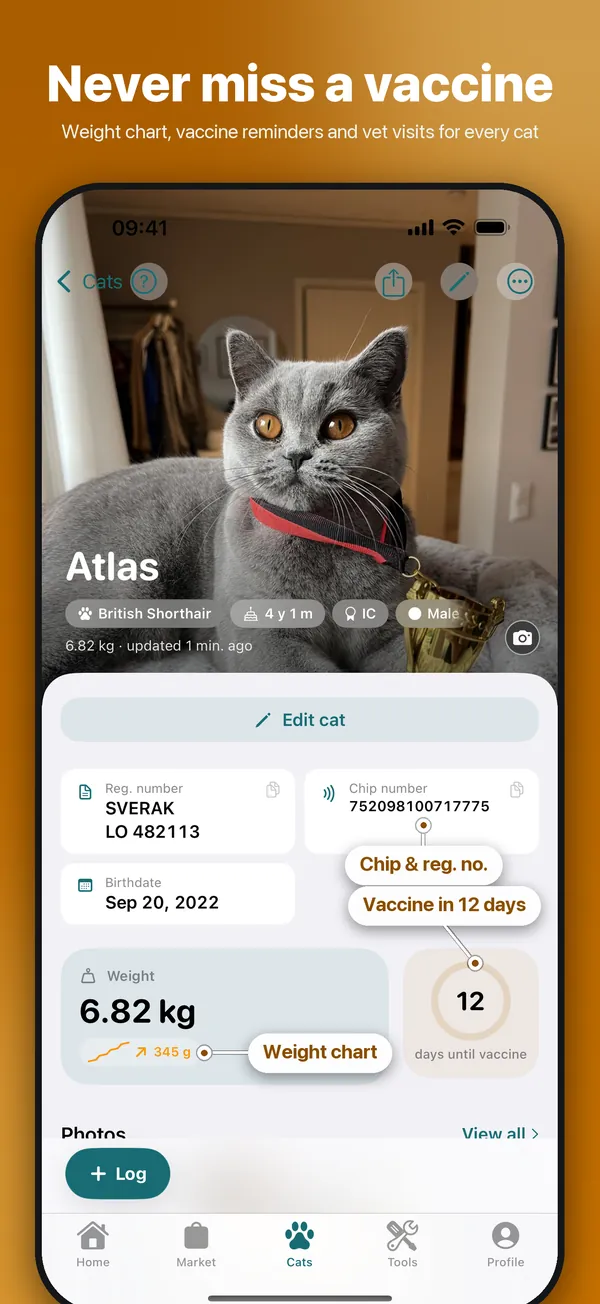
Do this in the app
Name, sex and date of birth is all it takes. Then add photos, vaccinations, weights and papers — the AI reads your documents for you.
- Open Cats and tap Add Cat.
- Fill in name, sex and date of birth. Everything else can wait.
- Save. Open the cat to add a photo, vaccinations and weights.
See the full guide →
Knowledge quizzes: Chronic kidney disease
Chronic kidney disease is common in older cats. Learn the early signs, why testing matters, and how the right diet and hydration help your cat live well.
1. Which cats are most likely to develop chronic kidney disease?
- Only kittens under one year old
- Only pure-breed cats, never mixed breeds
- Older and senior cats, as it becomes more common with age
Show answer
Correct answer: Older and senior cats, as it becomes more common with age
Chronic kidney disease is one of the most common illnesses in older and senior cats. The kidneys gradually lose function over months to years. Because age is the biggest risk factor, regular check-ups matter more as your cat gets older.
2. What is an early sign of kidney disease to watch for?
- Suddenly refusing to use the litter box out of stubbornness
- Drinking and urinating noticeably more than before, with gradual weight loss
- A glossier coat and more energy than usual
Show answer
Correct answer: Drinking and urinating noticeably more than before, with gradual weight loss
Increased thirst and urination, along with slow weight loss and a reduced appetite, are common early clues. Failing kidneys cannot concentrate urine, so cats drink more to keep up. Noticing these changes early gives you a head start on treatment.
3. Can chronic kidney disease be cured?
- No, but it can often be managed to keep the cat comfortable for a long time
- Yes, a short course of tablets fully cures it
- Yes, surgery reliably restores the kidneys
Show answer
Correct answer: No, but it can often be managed to keep the cat comfortable for a long time
Chronic kidney disease cannot be cured because lost kidney function does not return, but it can be managed well. Diet, hydration and medication can slow its progress and keep your cat feeling good for months or years. The aim is quality of life, not a cure.
4. How is chronic kidney disease usually detected early?
- By weighing the cat at home once a year
- By watching only for changes in coat colour
- Through blood and urine tests, often at a senior check-up
Show answer
Correct answer: Through blood and urine tests, often at a senior check-up
Blood and urine tests can reveal kidney changes before your cat looks unwell, sometimes long before obvious signs appear. That is why senior wellness screening is so valuable. Catching it early means you can act sooner to protect the remaining kidney function.
5. Which of these helps manage a cat with kidney disease?
- A high-protein, high-phosphorus diet
- A vet-recommended renal diet and plenty of water
- Withholding water to reduce urination
Show answer
Correct answer: A vet-recommended renal diet and plenty of water
A special renal diet is lower in phosphorus and has adjusted protein to ease the workload on the kidneys, and good hydration is essential. Wet food, water fountains and multiple water bowls all help. Never restrict water, as these cats need to drink more, not less.
6. Why does senior screening matter for kidney disease?
- It can catch the disease early, when treatment does the most good
- It is only useful once the cat is already very ill
- It replaces the need for any diet changes later
Show answer
Correct answer: It can catch the disease early, when treatment does the most good
Routine screening in older cats can find kidney disease at a stage where diet and treatment make the biggest difference. Early action helps slow the disease and preserve quality of life. Ask your vet about senior check-ups, typically from around seven years of age.